
CEBU-(HISTORY)
Cebu is a province in the Philippines consisting of the Cebu Island and many other surrounding islands. Its name’s derivation has many alternative interpretation but according to history, it was derived from the word “Sibu” which means “trade”. During the reign of Rajah Humabon, the island has since become an important trading center where various products are being bartered like agricultural products, precious stones, perfumes, etc. Its harbors has become known vernacularly as “Sinibuayng Hingpit” which means “the place for trading” which later was shortened to sibu or sibo (“to trade”) from which the modern name “Cebu” came from.Cebu City, the capital of Cebu, is considered to be the oldest city in the Philippines. It is also known as the oldest settlement established by the Spaniards in the country.
It is known to be a fishing village before the Spaniards came but became industrialized through the years. It is now one of the most developed provinces in the Philippines, with Cebu City as the center of commerce and industry.
(FACTS BOUT CEBU)
- One Philippine president hailed from Cebu-Born in Cebu City, Vice President Sergio Osmeña became president on August 1, 1944, following the death of President Manuel L. Quezon. He served until May 28, 1946.
- One Philippine president died in Cebu.-On March 17, 1957, President Ramon Magsayay was on his way back to Manila after visiting Cebu City. Unfortunately, the “Mt Pinatubo,” a Douglas C-47 plane, carrying Magsaysay and 25 other people crashed on Mount Manunggal in the town of Balamban. Only journalist Nestor Mata survived the crash.
- Cebu has the country’s smallest and oldest fort.-Fort San Pedro in Cebu City was built during the Spanish occupation to fend off local attackers. It later served as a bastion of resistance of Filipino revolutionaries in Cebu, barracks for American forces, a school, a refugee camp during World War II, and an army camp after the war.The fort was restored in the years that followed. It is located beside the Plaza Independencia park.
- Cebu once had a railway system.-The main track, stretching over 90 kilometers, linked the towns of Argao and Danao (which became a component city in 1961). Unfortunately, the railway system was heavily damaged during World War II.
- One of the oldest schools in the Philippines and in Asia can be found in Cebu.-The history of the University of San Carlos (USC) can be traced back to the Jesuits-founded Colegio de San Ildefonso in 1595. It was closed in 1769 and re-opened in 1783 under the name Colegio-Seminario de San Carlos. The college attained university status in 1948.
- Cebu has the oldest Christian relic in the Philippines.-Made by Flemish artisans in Europe, the Santo Niño de Cebu (Holy Child of Cebu) was a gift of Ferdinand Magellan to Rajah (King) Humabon and Queen Juana for their baptism into the Roman Catholic Church in April 1521.
(POPULATION AND MUNICIPALITIES)-
Cebu was the most populated province in Central Visayas
At the national level, Cebu shared 3.1 percent to the total population of 76.5 million and consists of 3 independent cities, 6 component cities and 44 municipalities, How big is the island of Cebu?
4,933 km².The city comprises 80 barangays. These are grouped into two congressional districts, with 46 barangays in the northern district and 34 in the southern district. The three most populous are Guadalupe ( 61,000), Lahug ( 38,000), and Tisa (37,000).
(FAMOUS FOOD )
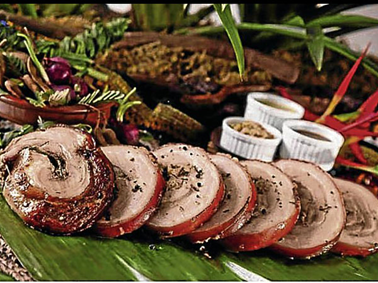
Inasal or Lechon
Inasal is a Cebuano term for Lechon. It can be Inasal na Manok or Inasal na Baboy (Lechon Manok or Baboy), Roasted Chicken or Roasted Swine. But the most popular and the most delicious food in Cebu is the Inasal na Baboy (Lechon Baboy). Cebu is the only place in the Philippines where you can find the most delectable Lechon.
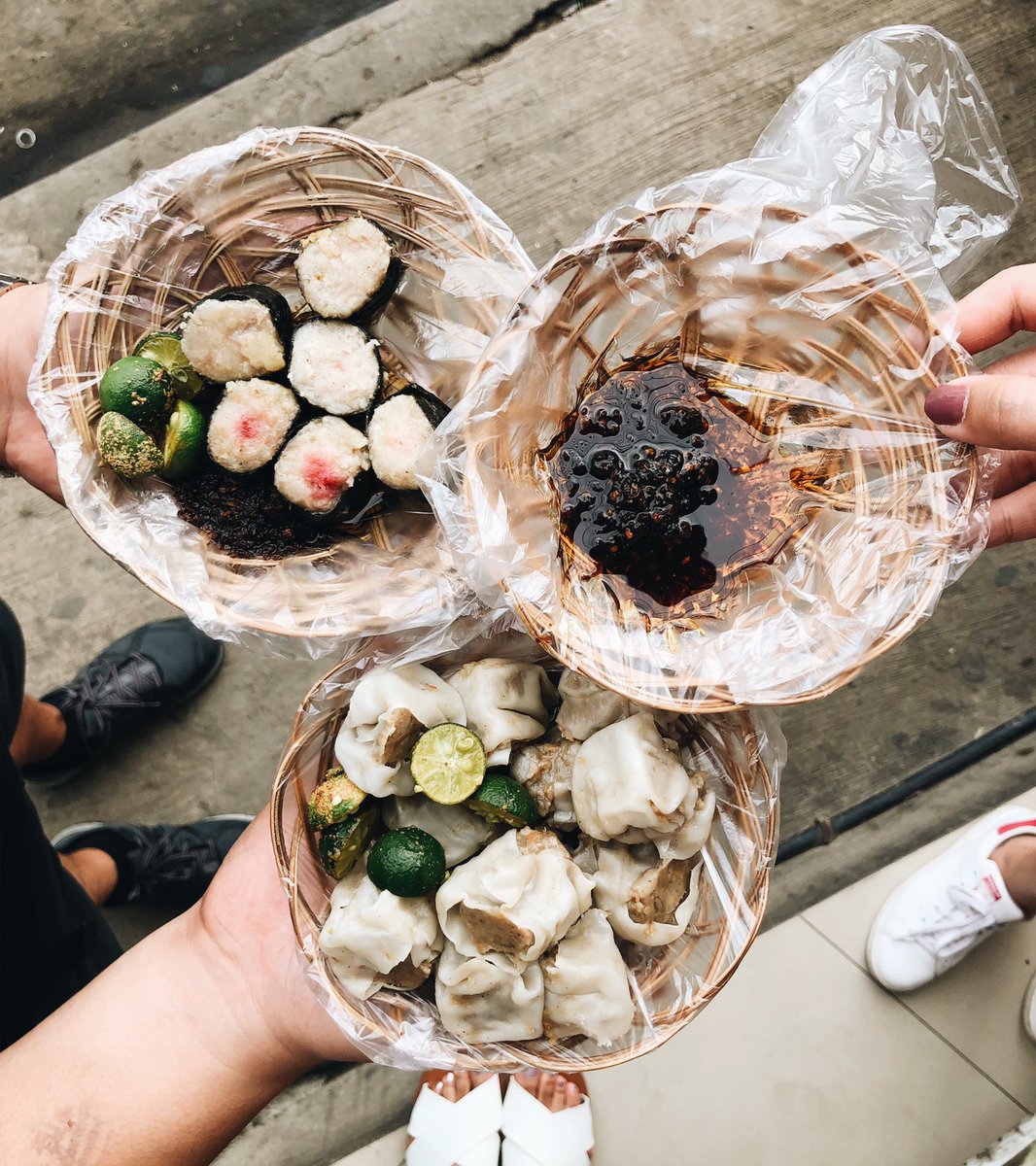
Siomai sa Tisa
Siomai is originated in China. When this food was introduced in Cebu, it had become one of the favorites of the Cebuanos as well as local and foreign visitors. Actually it isn’t just called Siomai anymore in Cebu but Siomai sa Tisa. Siomai sa Tisa was originated in Tisa, a barangay in Labangon, Cebu City. This food is almost the signature food of Cebu. Best eaten along with puso or hanging rice, rice wrapped in coconut leaves.
Ginabut
This delicacy is the Cebuano version of Chicharon Bulaklak. Ginabut is an intestine of a swine deeply fried. Ginabuts are sold in street corners of Cebu with a cariton (cart). There are also vendors who peddle Ginabuts to some areas in Cebu. Although this food is high in cholesterol, it is so crunchy and yummy, perfect for an instant meal in anytime of the day.

Linarang
This unique delicacy is made of fish, particularly the Stingray fish or Pagi. This is mixed with coconut milk and some special ingredients. This food can be found in the some street sidewalks in Cebu like Jones St. or Osmena Boulevard and in Lapu-Lapu City. This food in Cebu is beast eaten immediately right after it’s cooked.

(TOURIST SPOT)
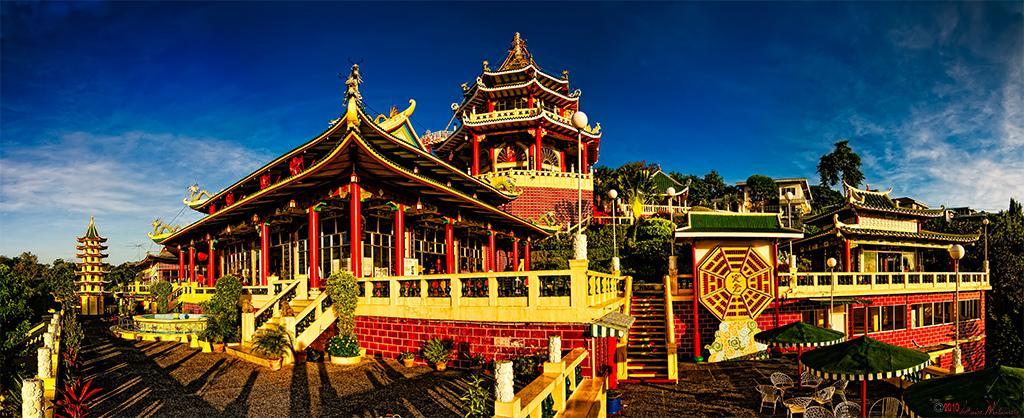
- Cebu Taoist Temple
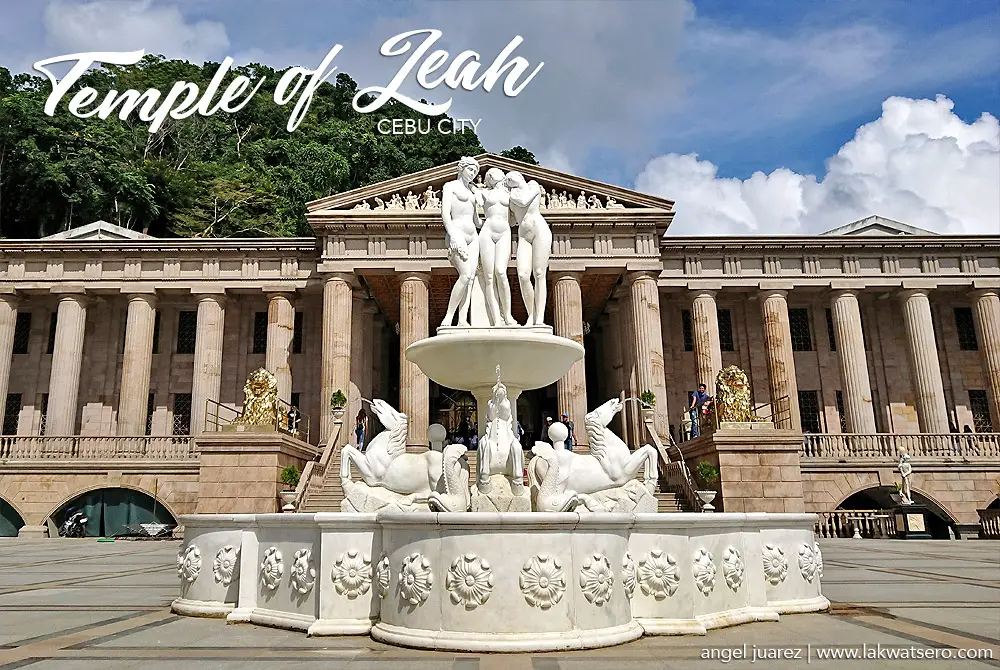
- Temple of Leah
- Sirao Flower Garden

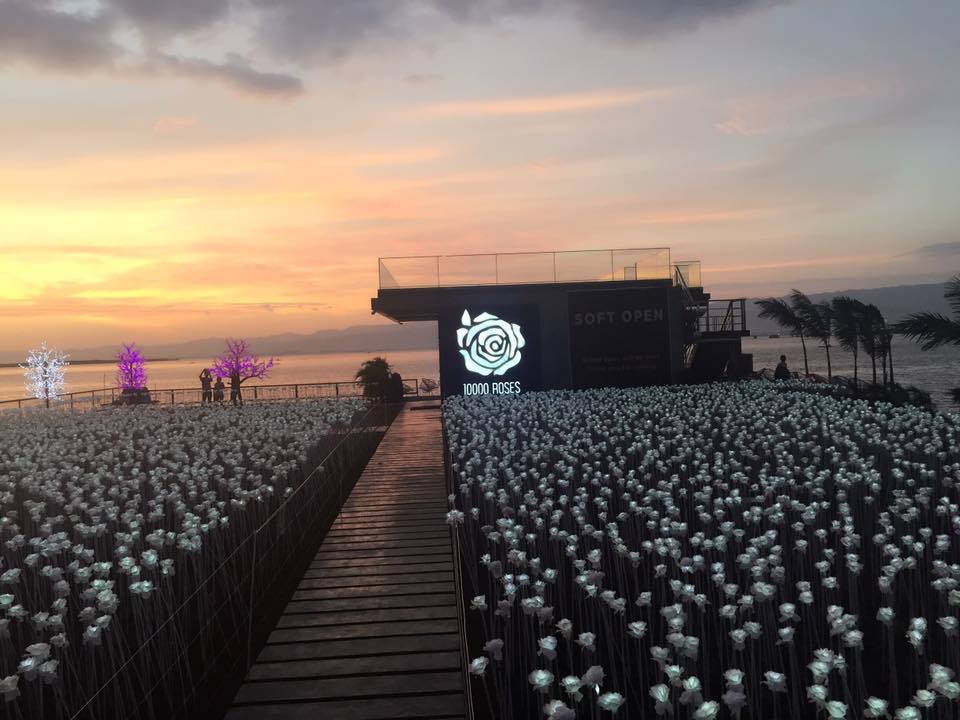
- 10,000 Roses of Cebu
- Osmeña Peak

- Kawasan Falls

7. Pescador Island

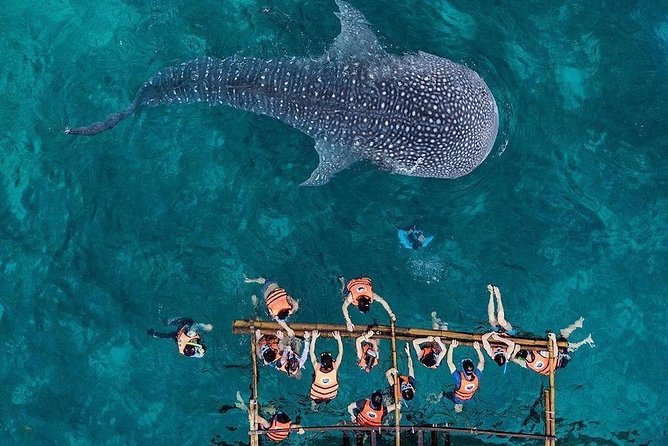
8. Oslob Whale Sharks
11. Simala Church

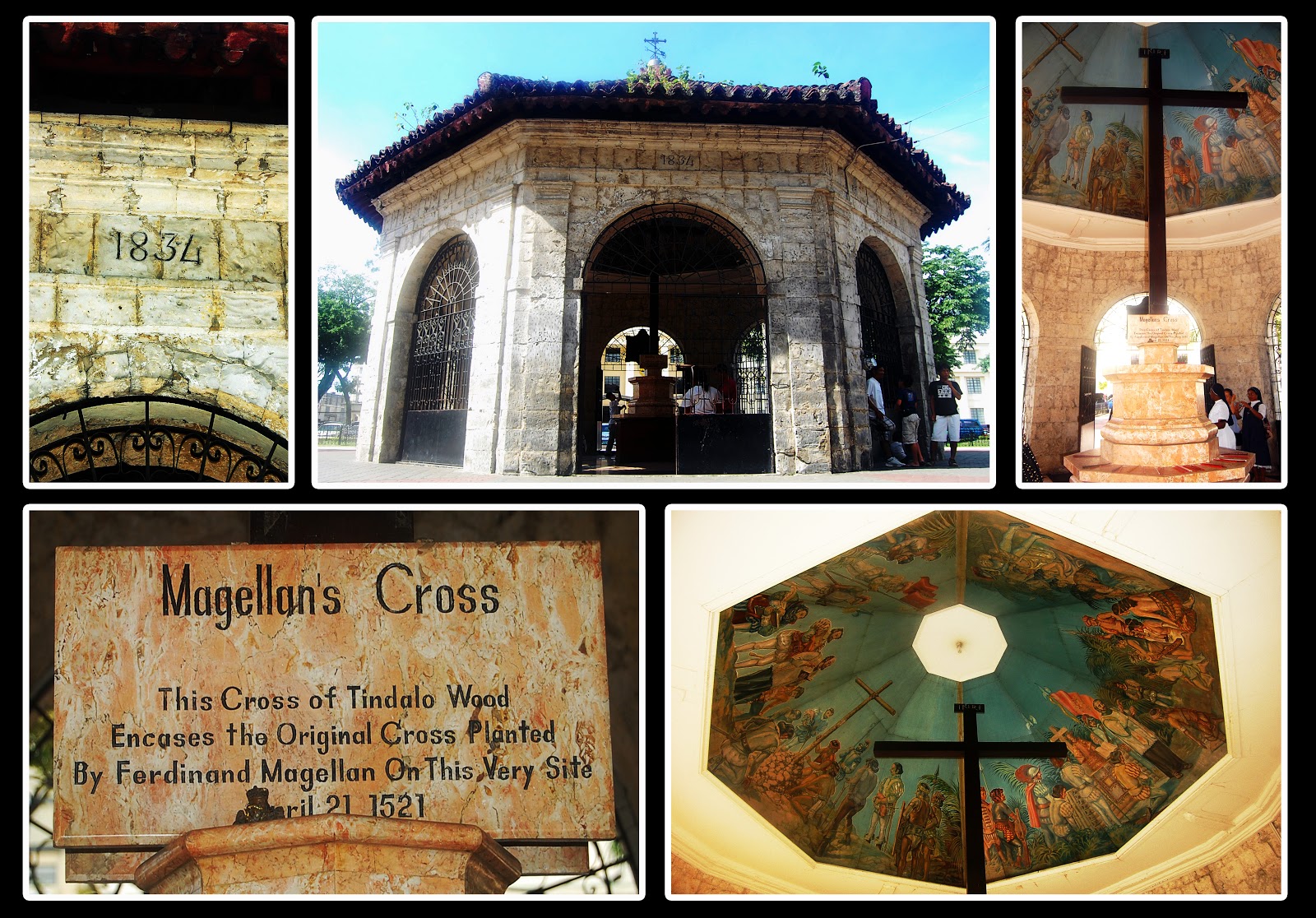
12. Magellan’s Cross
The Heritage of Cebu Monument

(FESTIVAL)
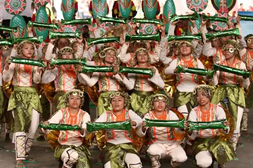
Bodbod Festival
The town of Catmon is famous for its tasty “bodbod”, hence the festival celebrated every 10th of February. The street dancing competition is participated by the different barangays has its dance movements, the movement of making the bodbod with the costumes in bodbod concept.
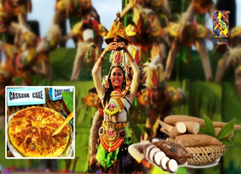
Camotes Cassava Festival
Camotes Cassava Festival is a yearly celebration every 2nd week of June in Camotes Island for a bountiful harvest where farmers display their various cassava-based products, share their varied technical experiences in producing and processing cassava products.
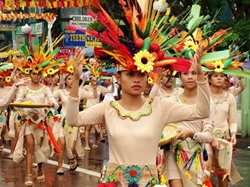
Kadaugan sa Mactan
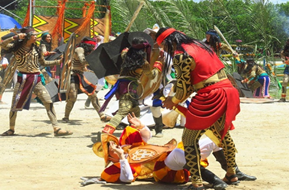
The Kadaugan sa Mactan, celebrated every 22nd-27th of April, is a weeklong commemoration of the historic battle of Mactan between the Spanish Conquestador Fernando Magallanes and Mactan Chieftain Lapu-Lapu. The festival features various activities highlighted by the series of musical productions culminating with the famous battle, food street and live band entertainment.
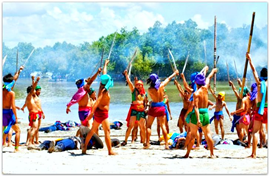
Semana Santa sa Bantayan
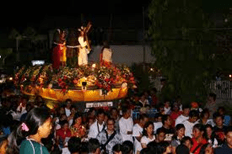
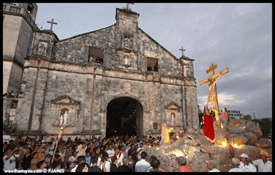
Also known as “Pasko sa Kasakit”, this festival is celebrated during Holy Thursday and Good Friday in the observance of the Holy Week on Bantayan Island with procession and merry making. Experience these wonderful festivals by visiting Cebu! Explore the province with your family! Visit the different towns in the province hassle-free by renting your own car rental in Cebu.
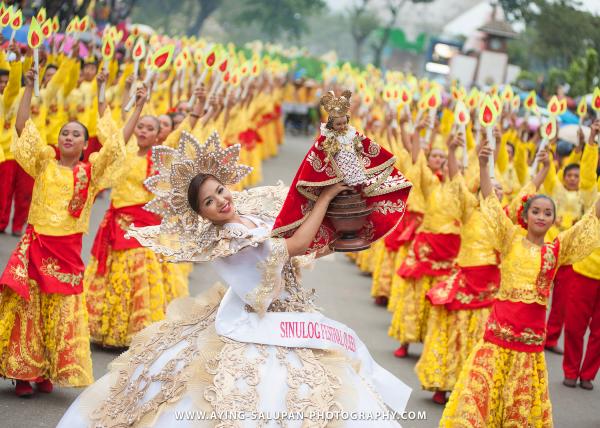
Sinulog Festival
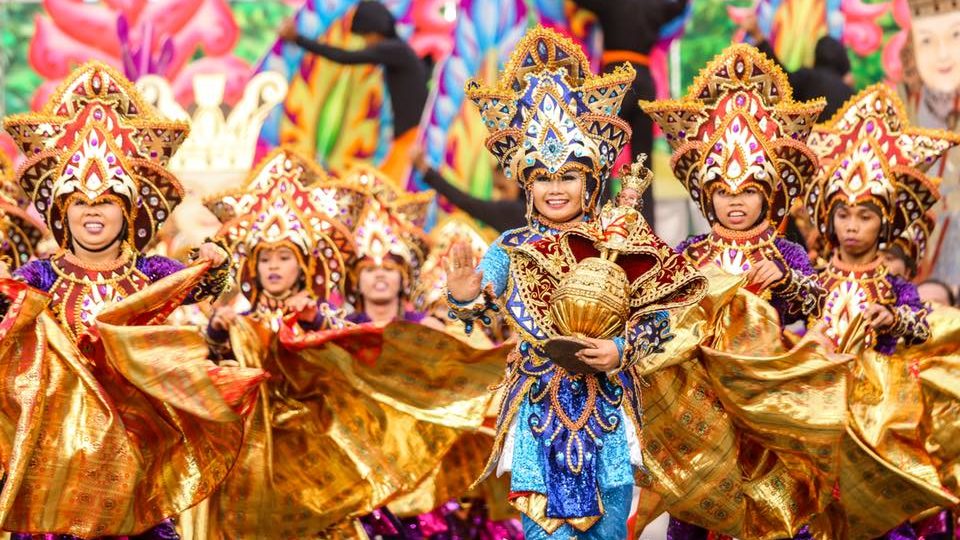
This is Cebu City’s most popular and grandest festival celebrated every 3rd Sunday of January in honor of the Señor Sto. Niño. Foreign and local tourists flock to Cebu City for this celebration and join in the procession and the grand mardi gras. The highlight of this festivity is the street dancing.

What are you waiting for? come and visit Cebu!
 TRAVEL WONDERS